Children's book · Open Government Products
Ouchies!
Teaching the most vulnerable children to recognise abuse — and to speak out.
We envision a world where abuse is impossible to hide, so that interventions can happen in time.
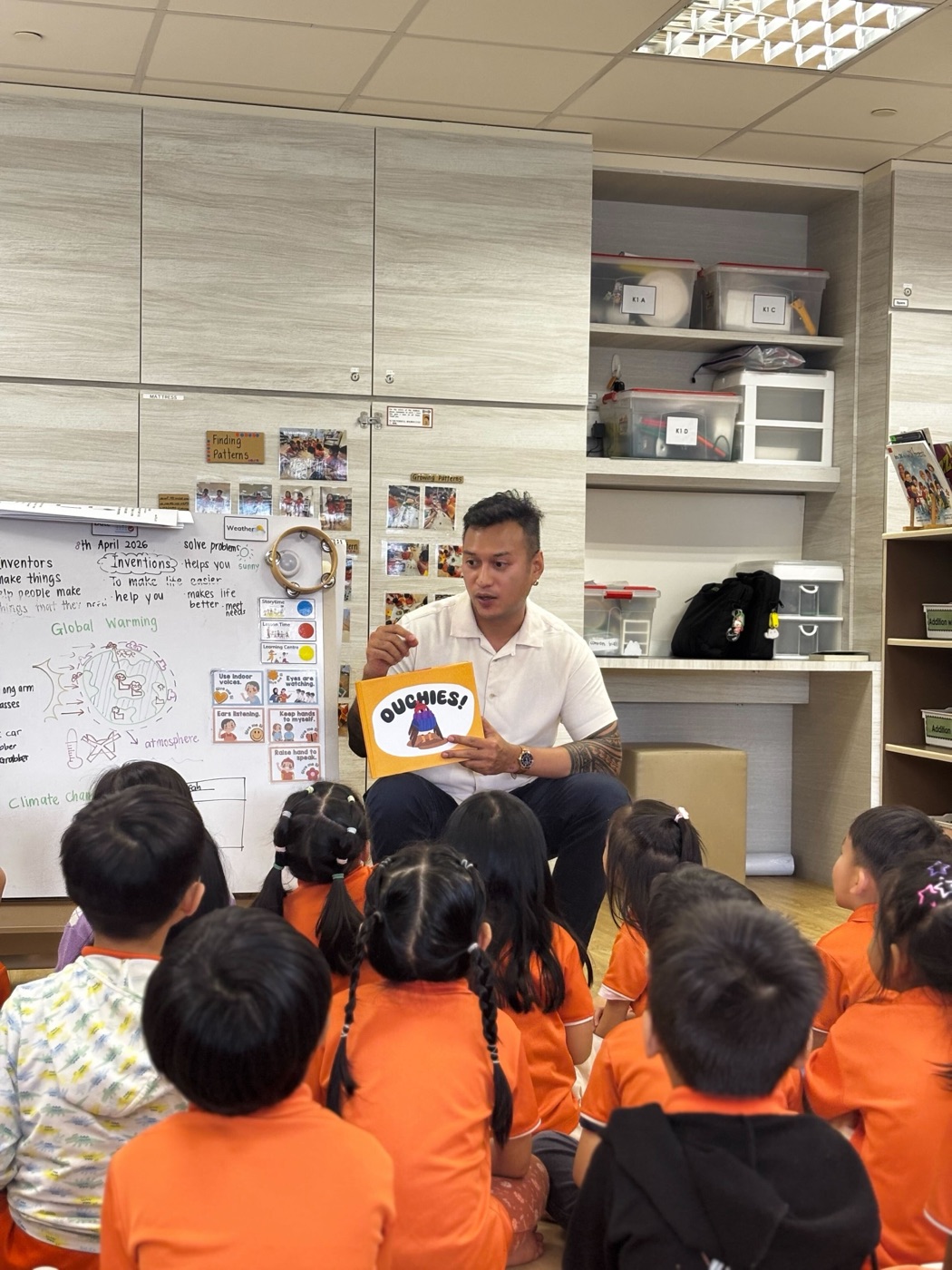
Children aged 4 to 6 are highly vulnerable to unreported abuse: they depend on their caregivers and cannot protect themselves from harm. Ouchies! is an engaging picture book that teaches children to recognise the symptoms of abuse and equips them to speak out if they are suffering.
The problem
The Domestic Violence Trends Report 2024 classifies abuse cases into tiers by severity. Tier 1 cases are lower-risk — abuse or neglect is identified but not immediately life-threatening. Tier 2 cases are higher-risk and need immediate intervention: severe physical injury, neglect, or situations that could cause long-term harm.
- New Tier 2 cases dipped slightly from 2021–2023, but remain above pre-COVID levels — likely due to family stress during the pandemic and greater public awareness.
- Children aged 0–6 accounted for the largest share of new Tier 2 cases — the group least able to protect themselves.
- The most common type of abuse was physical, followed by neglect and sexual abuse. Physical abuse is more detectable, yet remains significant; neglect is often far less visible.
So we asked: how might we ensure the most vulnerable age group gets help as soon as possible when they are suffering physical abuse?
The solution
We created an engaging children's book for ages 4 to 6 that teaches them to recognise the signs of abuse and encourages them to speak out.
Research
- Learnt the problem space from the Early Childhood Development Agency (ECDA), the Ministry of Social & Family Development (MSF) and Singapore Children's Society (SCS), including existing interventions.
- Studied successful children's books worldwide and locally, distilling the elements that make them work.
- Reviewed existing books that already cover domestic violence, to calibrate tone and pitch for the target age group and find the gaps.
Approach
- Wrote and refined the story over 3–4 rounds so the takeaways were clear and actionable — explicit and simple enough for young children, yet sensitive and nuanced, in age-appropriate language.
- Consulted professionals and policy owners to align the messages with existing escalation policy and what adults should do when they suspect a case.
- Tested the story with more than 10 parents of children in the target age group, collecting satisfaction scores benchmarked against their favourite children's book, then refined.
- Included an insert for adults on what to do when they suspect abuse. A next phase may add guidance for teachers and parents, such as guiding questions.

Get involved
- Teachers who want to read the book to students — get in touch to explore print copies.
- Administrators of educational institutions (e.g. childcare centres) who want copies — reach out to explore.
For all queries and feedback, contact jandonyada@gmail.com.
Acknowledgements
With thanks to MSF, ECDA and SCS for generously sharing their knowledge and insight; Pearly Ong for contributing to the illustrations; and Justin Chia for managing paper press.
Team
- Alexander LeeEngineering
- Azer WHREngineering
- Jan DonyadaProduct
- Natalie TanDesign
- Shen YunxiPolicy